

Is improving the employee experience... easy?
Well, you know, eas-ier than we've been doing it

Hi! My name is Bree, and I write about how to have better days at work and in life. Subscribe for posts on everything from 20 short rules for better days at work to Grandpa Mornings. And order my new book, Today Was Fun: A Book About Work (Seriously)!
You’re here! I’m here!
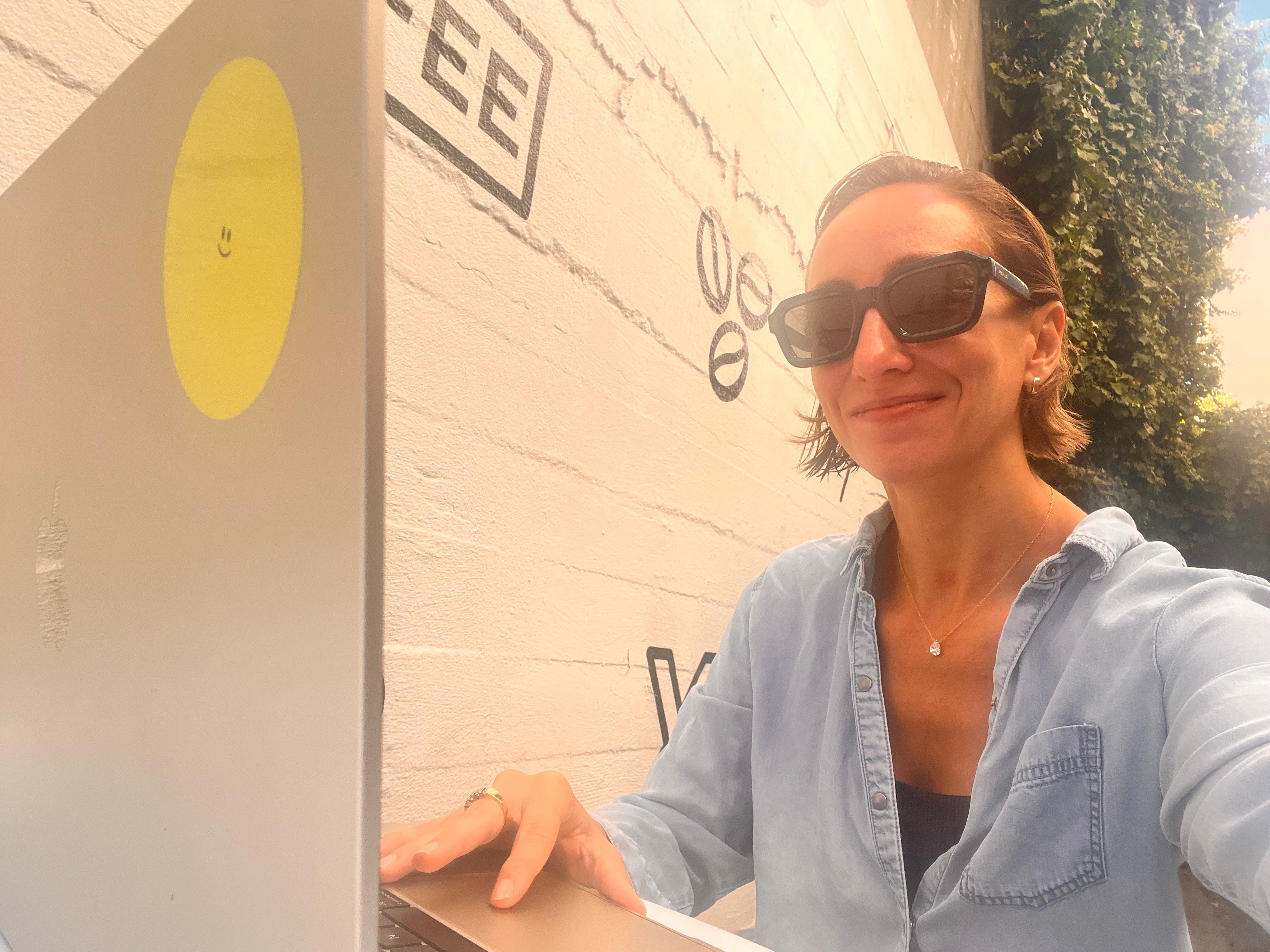
It’s been too long. Which is all me, obv. We went to Ireland and Greece and then I spent some time with Arden cleaning out her room and back to school shopping. Now I’m in San Francisco speaking at the Responsive Conference.
And I’ve been thinking about computer screen wipes. It’s a theory of change…
But let’s back up and walk into this one. Things I love:
Not equating difficulty with value
Discovering a gap between what leaders/consultants think people want at work and what they actually want
Pleasure at work
Demonstrating thoughtful care for each other
Computer screen wipes
I’ve been in consulting for ages, and if there’s one thing that sells, it’s the notion of BIG STRATEGIC SYSTEM-WIDE CHANGE. And look, sometimes that’s exactly what the moment calls for. But I wonder if other times that big restructuring, the new platform rollout, the process overhaul, is more for the leaders than it is for the work, the employees, and the impact.
Understandably, leaders feel much more comfortable sharing 50-page decks with root cause analyses and 5-phase rollouts than they do little tweaks. A CHRO might question their worth and the deservedness of their paycheck if their grandest plan presented to the CEO was “let’s put computer screen wipes in each conference room.”
Similarly, there’s been so much written about meaning and purpose at work over the last decade. And of course, I like to feel my work is meaningful. Purpose is a beautiful thing. But I’m always a tad skeptical of any solve that excites, most of all, the executive team. Call me curmudgeonly. Executives have gotten really into their talk tracks about changing the world, about the depth of purpose of their organization—expecting it will light their employees up like fireflies. But I wonder if we dove so deep we forgot what it means to splash around at the surface in the sunlight. Forgotten what it means to simply… have a good day.
The Guardian did a piece about the book recently. One of the pull quotes they highlighted from the interview was this:
Employees ask themselves:
“Wait, do I want to change the world,
or do I want to go home and cook dinner?”
Do you ever feel that tension?
Back in my grad school days I remember learning about the two different ways humans understand their own happiness: “experienced” happiness and “reflective” happiness. You’d measure experienced happiness by say texting someone asking them to rate how happy they were in that moment. You’d measure reflective happiness by say sending an engagement survey once a year.
Oh, look at that, companies do exactly ONE of those. It’s an important one, but it leaves a LOT on the table in terms of actually improving people’s experiences. Even pulse surveys often focus on reflective happiness, albeit over shorter timeframes.
My friend
and host of argues that all experiences are…Local—you may read about something happening far away, but you’re reading it a foot from your face
Immediate—you may think about the past, but you’re thinking about it now
Mediated—they pass through our own filters and preferences
Embodied—we take in the world with all of our senses
Or in other words, when thinking about employees, how often are we considering the daily, lived experience? As in, Alan is at his desk at 2:43pm answering a Slack. What’s making him feel energized and impactful? What’s pissing him off? Did he laugh today?
Which brings me to computer screen wipes.
On the plane from NYC to SF I opened my computer, and somehow, with fresh eyes or that 36,000 foot sunlight, I saw just how dirty my computer was. I thought back to when I was consulting for one client who had computer screen wipes in every conference room. I used one almost daily when I was at their offices. It was such a simple, low-cost offering that made a big difference to my day. I felt so satisfied, put together, fresh. Similar perhaps to the “make your bed in the morning” and you’ll win the day advice.
I understand the instinct not to throw cheap hacks at a problem. But I also wonder what has a bigger impact on the quality of an employee’s day, today: A new performance review platform? Or computer wipes in conference rooms? Certainly a small wipe is not going to forgive feeling frustrated at the opacity of the promotion process. And I’m not saying a fix for that is not warranted. But things like clear promotion processes are “hygiene factors” or elements of an organization that, when absent, make an employee unhappy, but when present, don’t leave anyone singing. They’re important—to be sure—but our aim should be higher than to make employees “not mad.”
Understandably, executive attention tends to go where the employee survey directs it, and as we’ve structured (most) employee surveys, they 1/ neglect experienced happiness, 2/ orient leaders to shoring up weaknesses, and 3/ are sometimes the sole forum for anonymous employee feedback and therefore quickly fill up with frustrations. And when it feels like there’s so much to fix, why would we focus on delight?
But I wonder what would happen if we cultivated organizations and culture primarily with the simple question: “What could we do that would help one person have a great day, today?”
You might…
Find one process with a questionably necessary gatekeeper and experiment with removing a step. Do people’s expense reports really need to be reviewed in three layers?
Place “spray me” bottles around the office. Jancee Dunn of the New York Times shares, “For instance, I have a bottle of rose water on my desk at work. Sometimes when energy lags in the afternoon, I’ll ask a co-worker: “Do you want to be sprayed?” (TWF is also quoted in the article!)
Smatter a couple company-wide holidays throughout the year. Call them “Take a Hike” days.
Send out a “pet peeve” survey to find out what daily annoyances the company might solve. Maybe some company-wide tech has an annoying glitch. Maybe one coffee maker is wonky. MAYBE EVERYONE’S SCREENS ARE DIRTY.
Send out a “reverse pet peeve” survey to find out what parts of people’s work bring them disproportionate joy so you can amplify them. Does everyone love when the CTO whips out a pun? Get that CTO some airtime at the next all-hands! (H/T to Pip Coburn for the reverse pet peeve concept)
Create a “rent-a-joy” station in the office (or your home!) filled with cozy blankets, umbrella picks (why shouldn’t coffee be an umbrella drink?), space heaters, foam rollers and massage guns, small bars of fancy chocolate, and whatever else sounds delightful. Maybe have a suggestion box too.
Have a “that is so thoughtful!” brainstorm session. Have you ever gotten a gift that made you say, “They noticed! / They remembered! / How did they know this is exactly what I needed?” Could you imagine what trust would be built if employees felt that way about something leaders did? For example, I dined in a fancy restaurant once and within minutes someone noticed I was left-handed and they came over and reversed the place setting. Simple. Free to execute. And won me over immediately. That sort of thing.
I find suggestions like these sometimes make people uneasy. They feel frivolous. Like the sprinkles, not the batter. But maybe it’s only frivolous if you do all of this once and forget about it. What happens when a company creates a habit of making employees’ days 1% better? When the good moments compound into good days and good years?
I also imagine the objection, “Isn’t it tone deaf to focus on delighting employees when you can’t even guarantee their jobs? People want job security, not computer wipes.”
My rebuttal is this: Jobs are never safe. Let’s not pretend like they are and no employer can or should guarantee otherwise. So do you want to work at your insecure job with a dirty computer, or a clean one?
Also, leaders can just… say this: “We know we’re living through a lot of uncertainty. We have strategies and scenario plans, but still we can’t guarantee we won’t have layoffs at some point or need to pivot our business. And, yet, we’re here today. And it’s worth making our days—today and tomorrow and the next day—good ones. We have some ideas.”
In the Agatha Christie mystery I’m reading one of the characters tells the story of fighting in a war but the thing that bothered him most was the blister on his foot. Is it important to end the war? OF COURSE. But if ending the war is not remotely in your sphere of influence and is not happening today anyway, then maybe it would be nice to have better shoes in the meantime.
And with crises all around us, maybe it’s empowering—even hopeful—to focus on the local, the daily, the ordinary, the beautiful. On doing our best to take care of each other.
It might just get us through the war.
—
Notes
For any leaders thinking “YES! But still won’t fly in my org…” consider calling this theory of change “Systemic simplicity” and rolling out a strategic, self-reinforcing composition of interventions. Maybe there’s even a fancy deck.
What would make your day at work? Tell me!
This video made my day better immediately and it might make yours better too. Let’s call it the official music video of this post: Quite Simple (Choreographed by my brilliant friend Kanon Sapp, starring her partner Olivia Reid!)
Have you read Today Was Fun yet?
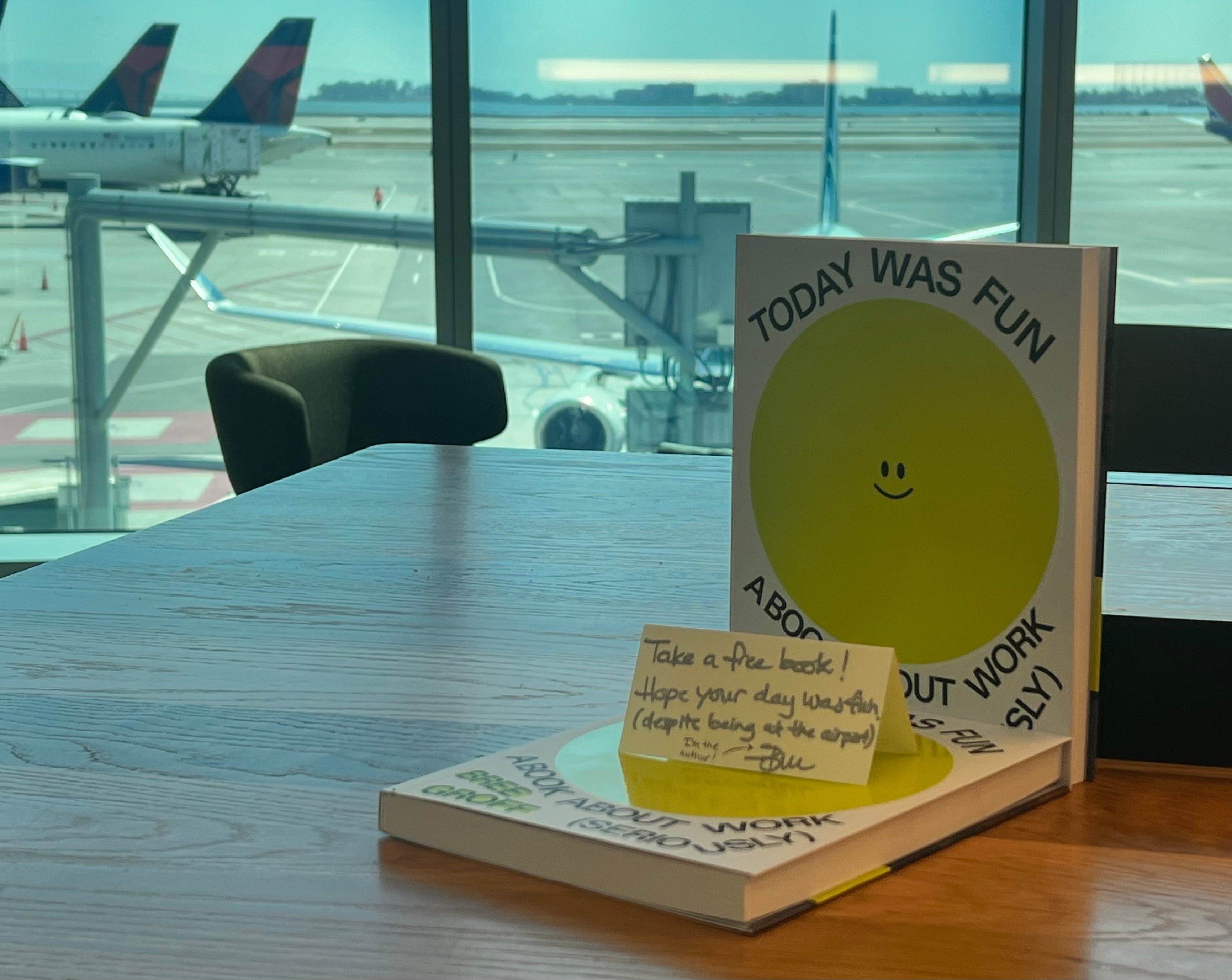
Inspired by
, some book marketing fun :)
This made me think of the 'Treat Trolley!' We went through a major change in my hospital going from paper to computers. The thing people talked about? The snack cart! Give the people what they want! Often it's Costco snacks...
PS I'm devouring your book right now, thank you!!
"Why shouldn't coffee be an umbrella drink?" is my new motto.